
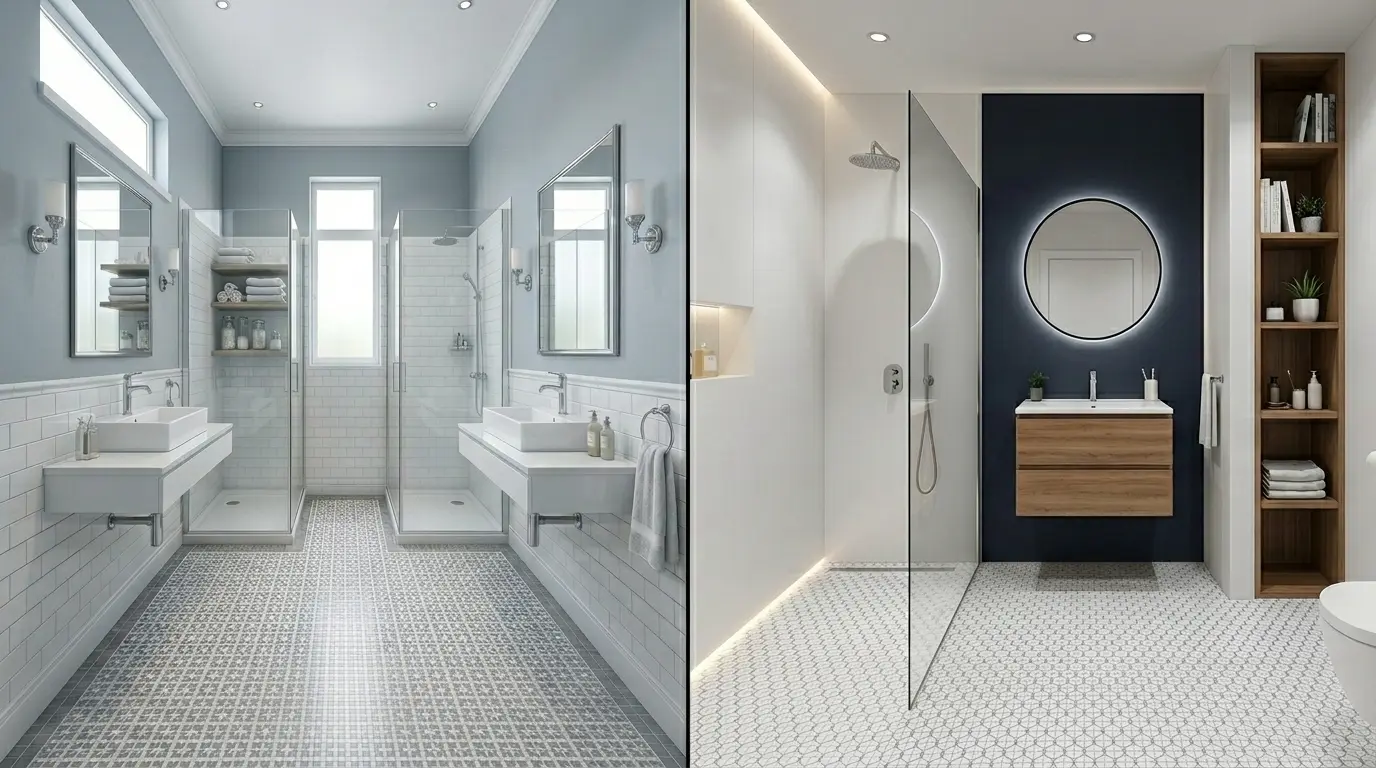
Small bathrooms are one of the most common remodeling challenges we see in Virginia, Maryland, and DC homes. The square footage doesn't change, but the way you use it can. Most small bathroom remodels that feel transformative aren't about adding space — they're about rethinking how the existing footprint works. After 15 years remodeling bathrooms in the DC Metro area, these are the five layout strategies that consistently make small Virginia bathrooms feel larger without moving a single wall.
Move the Vanity to Free Up Floor Space
A standard vanity sitting on the floor cuts the visual flow of a small bathroom in half. Floating vanities — wall-mounted with no cabinet base touching the floor — open up 6 to 10 inches of visible floor that makes the room read larger. The exposed floor continues uninterrupted from the door to the far wall, and your eye reads that as more space. In Virginia bathrooms, we pair floating vanities with large-format tile in a light color to amplify the effect. The plumbing rough-in for a floating vanity is the same as a floor-mounted unit. Most custom vanity installations in Virginia bathrooms convert to floating with no additional structural work.
Replace the Tub with a Walk-In Shower
In most small Virginia bathrooms, the tub takes up 30 to 40 percent of the floor plan and gets used a fraction of the time the shower does. Removing the tub and building a curbless walk-in shower in its place recovers that footprint and eliminates the visual barrier of the tub surround. A frameless glass door or an open wet-room layout keeps sight lines clear from the door through to the back wall. The bathroom doesn't get bigger, but it reads bigger because nothing blocks the view. We use large-format tile installation on the shower walls and floor — fewer grout lines mean fewer visual breaks, which adds to the open feeling.
Use Vertical Storage to Recover Wall Space
Horizontal storage — wide shelves, broad medicine cabinets, towel racks that span the wall — takes up visual width in a small bathroom. Vertical storage pulls the eye upward and keeps the floor and lower wall clear. Tall, narrow linen towers built between the toilet and the wall. Recessed niches in the shower wall for shampoo and soap instead of a hanging caddy. A mirror that runs from counter height to ceiling instead of stopping at eye level. These aren't cosmetic tricks. They redirect where you store things and change which surfaces read as open. In Virginia bathroom remodels under 50 square feet, vertical thinking consistently recovers usable storage without adding square footage.
Light Tile, Large Format, Consistent Grout
Tile choice matters more in a small bathroom than any other room. Dark tile closes a space. Small tile multiplies grout lines, which chops up the surface and makes the room feel busier. Large-format light tile — 24x24 or 12x24 porcelain in white, cream, or soft gray — runs uninterrupted and lets the eye move freely. Matching grout to tile color removes the grid pattern and makes walls and floors read as continuous surfaces. In Virginia bathrooms, we typically recommend the same tile family on the floor and shower walls for continuity. Continuing the floor tile into the shower without a threshold (curbless entry) extends that surface visually and removes the step that cuts the room in two.
Improve Natural and Artificial Light
Lighting is the fastest way to change how a small bathroom feels without touching the layout. A single overhead fixture leaves corners dim and makes the room feel smaller than it is. Layered lighting — recessed cans for ambient light, a backlit mirror or sconces flanking the vanity for task light, and a small accent inside the shower niche — eliminates shadows and brightens the full volume of the room. If the bathroom has a window, keeping it clear with frosted glass instead of a curtain brings in daylight without sacrificing privacy. In Virginia bathroom remodels, we coordinate the electrical rough-in for lighting upgrades as part of the full renovation rather than adding them as an afterthought.
Frequently Asked Questions
How much does a small bathroom remodel cost in Virginia?
Small bathroom remodels in Virginia typically run $8,000 to $25,000 for a full refresh with new tile, vanity, fixtures, and lighting. Full gut renovations with layout changes run higher. You'll get a custom quote after the on-site visit.
Is it worth removing a tub in a small Virginia bathroom?
In most cases, yes. If the home has a second bathroom with a tub, removing the tub in a small bathroom and converting to a walk-in shower recovers significant floor space and increases daily usability. Most Virginia buyers aren't penalized for one tub-free bathroom.
What tile size works best for a small Virginia bathroom?
Large-format tile — 24x24 or 12x24 — with matched grout color works best. Fewer grout lines mean fewer visual breaks, which makes the room read as a single surface instead of a grid.
Do floating vanities work in older Virginia homes?
Yes. The wall framing in most Virginia homes handles floating vanity loads without modification. We verify the wall structure during the estimate and handle any blocking needed as part of the rough-in.
How long does a small bathroom remodel take in Virginia?
Most small bathroom remodels run two to four weeks from demo to final walkthrough, depending on tile work, fixture lead times, and whether any plumbing moves. We provide a written timeline before work starts.